

Some collections begin with a practical need. Others emerge from trends. And then there are those that come from something much harder to explain: a feeling that stays with you for years until it finally finds the right form. The Maya Collection by Westminster Teak belongs to that category.
Designed as a modular outdoor teak collection, Maya began with a simple idea: creating furniture that could adapt to different ways of living and using a space. Not as a technical system of endless configurations, but as a collection designed to evolve alongside the people who use it.
The inspiration came from a childhood memory and from a very specific way of thinking about creativity: the idea that a few simple pieces can transform endlessly without losing their identity. That logic, something closer to play than to traditional design, ultimately shaped one of Westminster Teak’s most versatile collections. But Maya was never created simply to look beautiful or solve a functional challenge. It was designed for something far more everyday: supporting the way people actually live in their outdoor spaces.
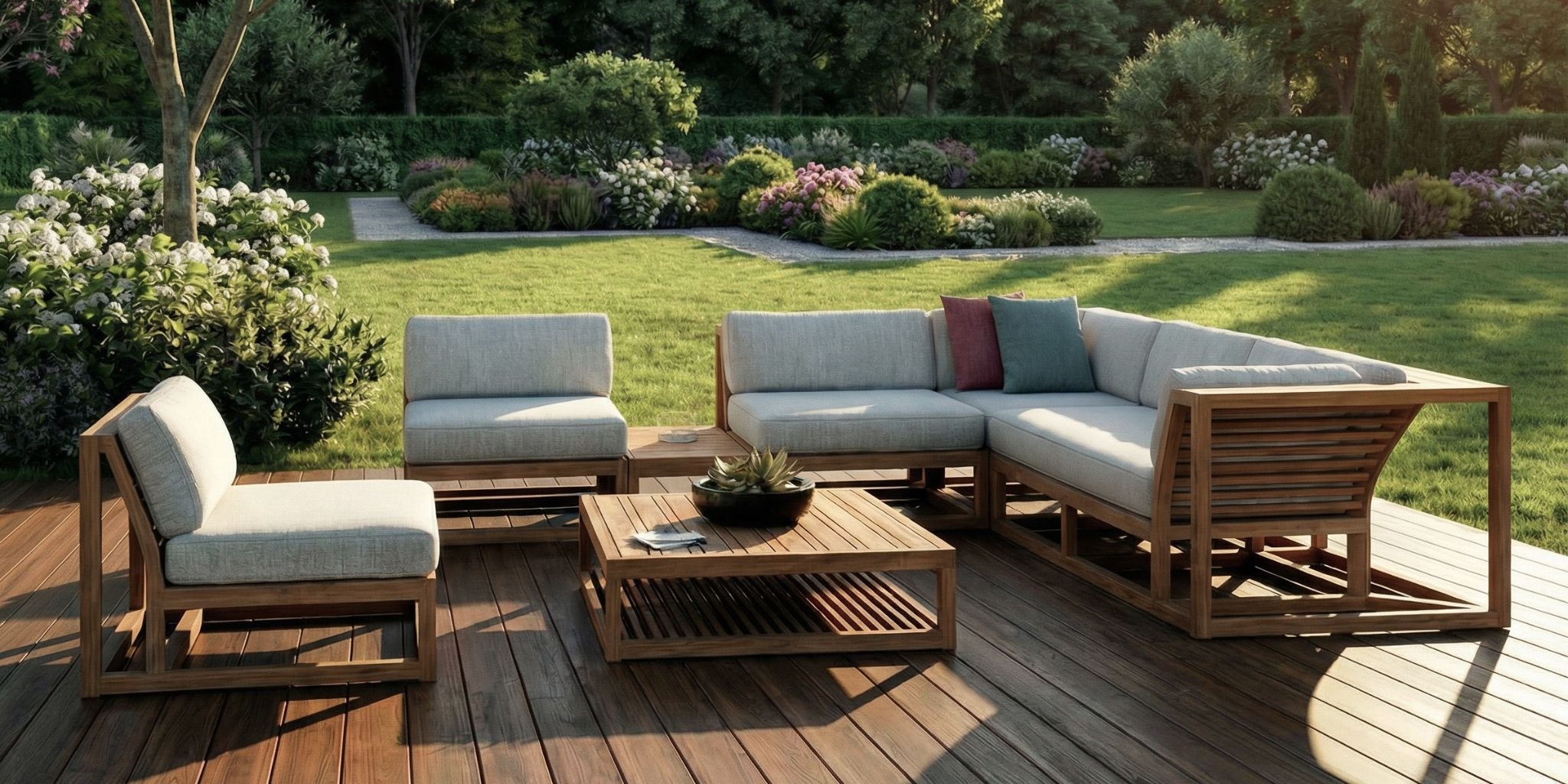
The Moment Everything Clicked Into Place
Some collections evolve slowly through ideas, sketches, revisions, and multiple directions before finding their final form. Maya was exactly the opposite.
As Mal Haddad, President and Designer of Westminster Teak, recalls:
"Maya didn't evolve through a slow series of sketches, but it came to me almost all at once. The pieces fell into place one after another. Unmistakably clear, the entire concept clicked into place in a single defining moment."
That detail matters because it defines the spirit of the collection from the very beginning. Maya wasn't conceived as a technical exercise in modularity or as an isolated functional solution. It emerged as a complete idea: a collection where every piece would naturally relate to the others, allowing multiple configurations without losing visual harmony.
That clarity also explains something people often notice immediately: Maya feels intuitive. Nothing feels forced. The proportions naturally work together. Pieces can expand, shift, or simplify without disrupting the overall balance. And that sense of ease has everything to do with where the idea began.
A Childhood Idea Brought Into Design
The inspiration behind Maya didn't come from architecture or from a particular design movement. It came from something many people recognize from childhood: LEGO.
Not the highly detailed and complex versions we see today, but the original sets: simple pieces, basic shapes, and an open-ended logic where the value wasn't in following instructions, but in imagining possibilities.
As Haddad explains:
"It was the memory of growing up with LEGO, back when the pieces were simple with basic shapes and a handful of colors... It was just these small bricks, but you could turn them into anything."
What's interesting about that memory isn't nostalgia itself, but the design principle behind it: the idea that simple, well-proportioned elements can continuously transform without losing their identity. That idea sits at the heart of Maya.
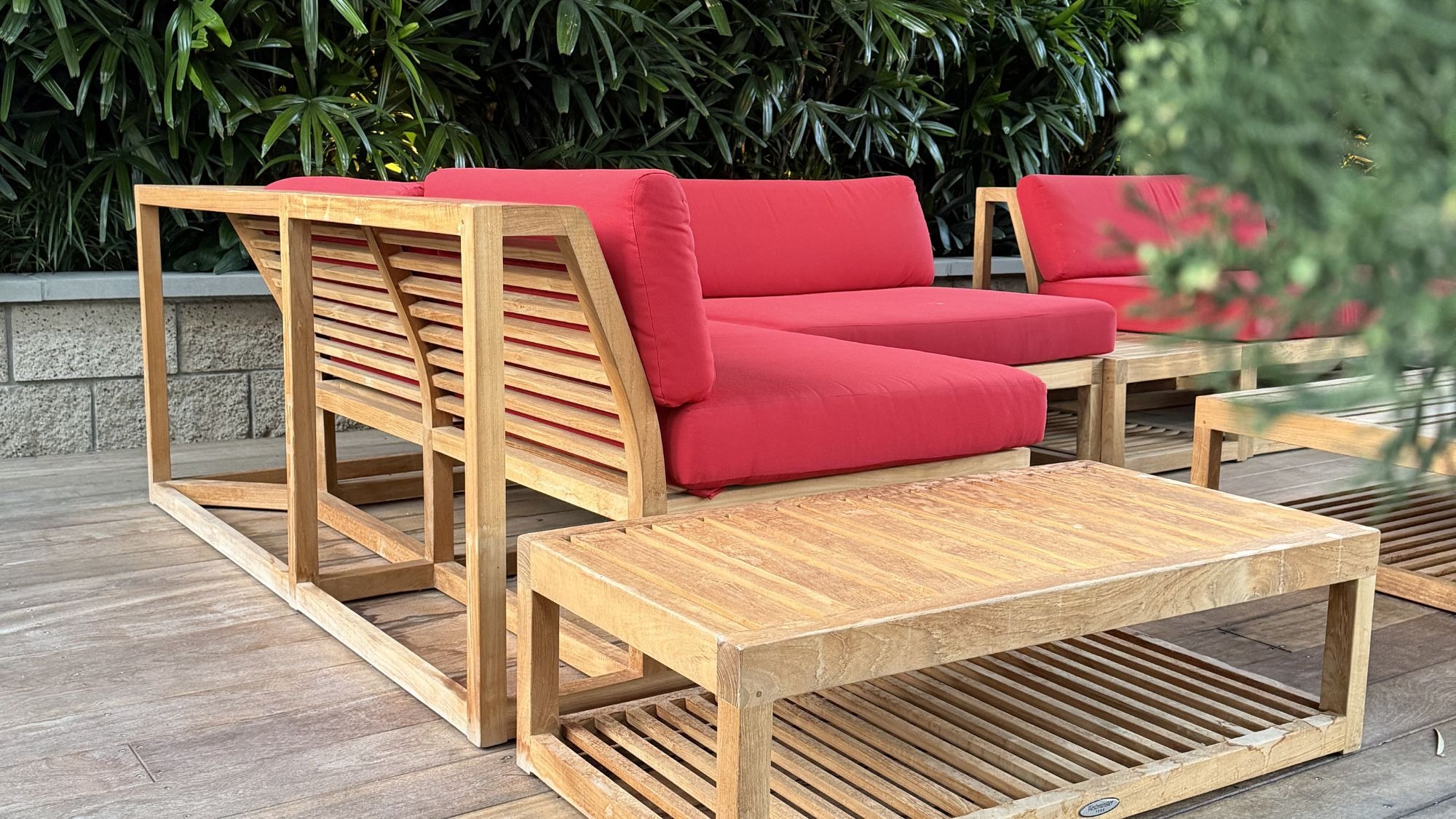
Each module functions independently, while also becoming part of a larger system. The pieces connect naturally, allowing different outdoor lounge configurations depending on the moment, the space available, or the number of people gathering.
Yet despite its flexibility, Maya never feels temporary or overly technical. Its modularity feels integrated quietly and naturally, less like a feature and more like an inherent part of the design itself. That balance may be one reason Maya continues to feel so relevant today: its ability to adapt without losing character.
Designed to Reconfigure Outdoor Spaces
Most furniture is designed to remain exactly as it was the day it was installed. Maya suggests a different approach.
Not as a constant invitation to rearrange things, but as an opportunity for a space to evolve alongside the people using it. One moment, it might become an intimate setting for two on a quiet afternoon. Hours later, it can transform into the center of a larger family gathering or an open lounge space for friends. Between those moments, the space shifts naturally, without rigid structures or permanent arrangements.
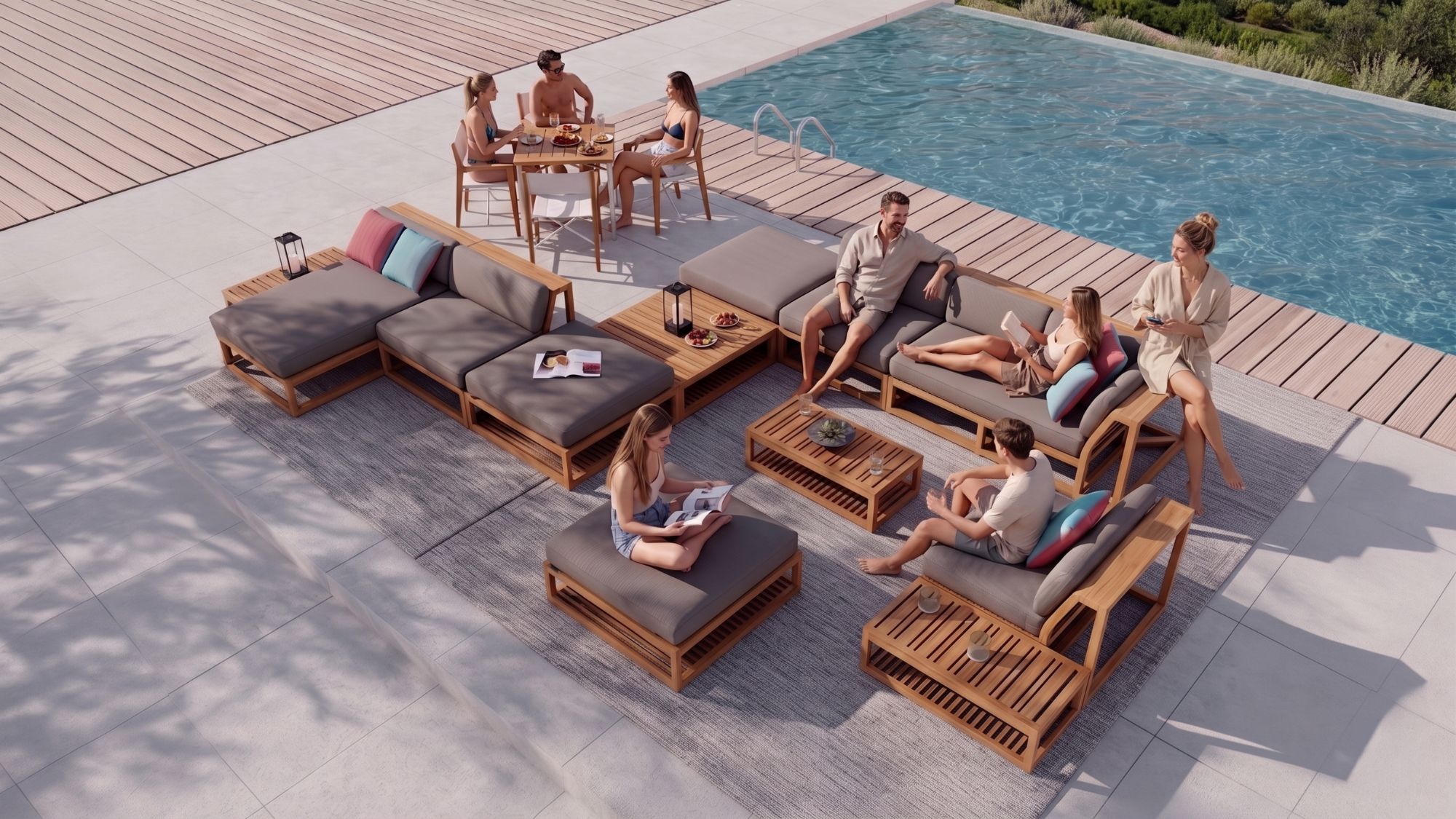
Haddad summarizes it simply:
"Maya carries that same spirit of endless possibilities. It's modular, versatile, and designed to evolve with you."
That idea may define the collection more than anything else. Maya isn't built around the assumption that there is one correct way to organize an outdoor space. It starts from the opposite belief: people change, moments change, and needs change too. Rather than imposing a final arrangement, it allows each person to discover their own.
Armrests That Do More Than They Appear To
Even Maya's smaller details are driven by intention. The oversized wraparound armrests are a perfect example.
At first glance, they appear to be purely aesthetic, generous lines that give the collection presence and proportion. But they serve a much larger purpose.
"The oversized, wraparound armrests aren't there purely for looks. They're meant to be used," says Haddadl.
They can hold a drink or a book, but they also become an impromptu seat, a place to lean, or somewhere to perch during conversation. There's even a subtle cultural reference embedded in the design — a quiet rejection of those childhood moments many of us remember: don't sit there. Maya removes that sense of restriction. It doesn't impose many rules about how a space should be used. And perhaps that reflects one of the collection's most interesting ideas: a vision of luxury that feels less formal and far more livable.
A Space Designed to Be Lived With
At its core, Maya was never intended to be a static object. It isn't a collection designed only to look beautiful in photographs or remain untouched. It was created to become part of everyday life.
For long conversations that stretch further than expected.
For reading, relaxing, spending time with others, or simply doing nothing at all.
That intention was already present in the collection's earliest campaigns:
"Your go-to place when you need to be alone, to sit with a friend, or gather with family. A place for serious conversation or serene contemplation. Your spot to stretch your legs, read a good book, to think, power nap, perch, or simply... do nothing at all."
And perhaps that's ultimately the best way to understand Maya. Not as a modular teak collection or a set of possible configurations, but as a flexible space that adapts to different ways of living. Because in the end, that was the original inspiration behind it all: creating something capable of changing while never losing its essence.
Explore the Maya Collection and discover the different ways it can adapt to your space.
Related Posts

Stay in Touch
Oops! Something went wrong while submitting the form


